
Hugging Face releases Carbon-A to map protein-coding regions across genomes
The MIT-licensed 1.2B model works directly from DNA and generated 566 million candidate loci, but its benchmark and early wet-lab evidence require careful interpretation.
2 min read
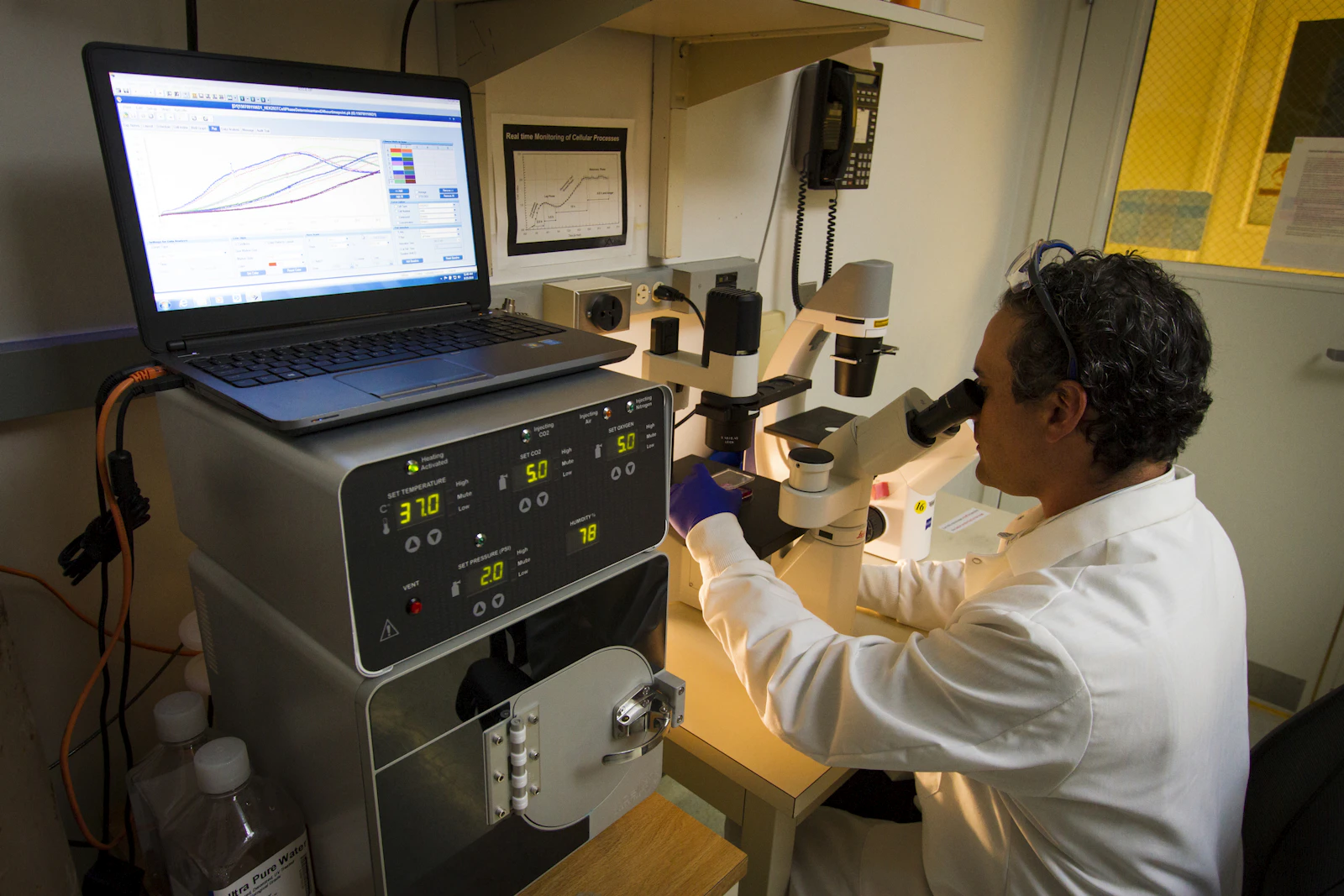
Hugging Face’s biology team released Carbon-A on October 8, a 1.2-billion-parameter model for locating protein-coding regions directly in eukaryotic DNA. The MIT-licensed weights are downloadable from Hugging Face as a 4.6GB safetensors file, while the accompanying Carbon Annotation Database exposes large-scale predictions for researchers to explore.
Carbon-A converts DNA into non-overlapping six-base tokens and processes 16,384 tokens at once, equivalent to 98,304 base pairs. It produces nucleotide-level probabilities separately for the forward and reverse strands. The model card recommends CUDA-enabled PyTorch with BF16 and fused scaled-dot-product attention; without an efficient attention kernel, full-length windows can require more than 32GB of additional GPU memory. It is not currently deployed by a Hugging Face inference provider.
Hugging Face reports a macro-averaged nucleotide F1 of 0.944 across 42 benchmark genomes, ahead of seven named baselines at nucleotide, exon and gene level. An out-of-distribution test on Tetrahymena thermophila, whose genetic code differs from the standard code, reached 0.960 nucleotide F1. These are publisher-reported results. The model card also warns that the supplied 26-genome evaluation panel was used during training and is not a newly held-out test set.
The team ran Carbon-A across 48,167 GenBank assemblies from 22,617 taxa, producing 566 million predicted protein-coding loci. Those are candidate genes, not 566 million experimentally confirmed discoveries. Initial PacBio Iso-Seq experiments in cat, Syrian hamster, chicken and Arabidopsis supported some predictions missing from RefSeq, but RNA evidence does not prove that a transcript becomes a functional protein.
Two release details remain incomplete: the model predicts coding occupancy rather than complete transcript paths or alternative isoforms, and the listed 10.2TB training-data bucket was marked private when checked despite the launch article describing the training data as released.
Sources: Hugging Face announcement · Carbon-A model card · Carbon collection and technical report · Training-data bucket · Unsplash image license
Conversation
0 approved commentsNo comments yet. Start a thoughtful conversation.
Join the conversation.
Sign in with ChatGPT to leave a comment or rate this article.